

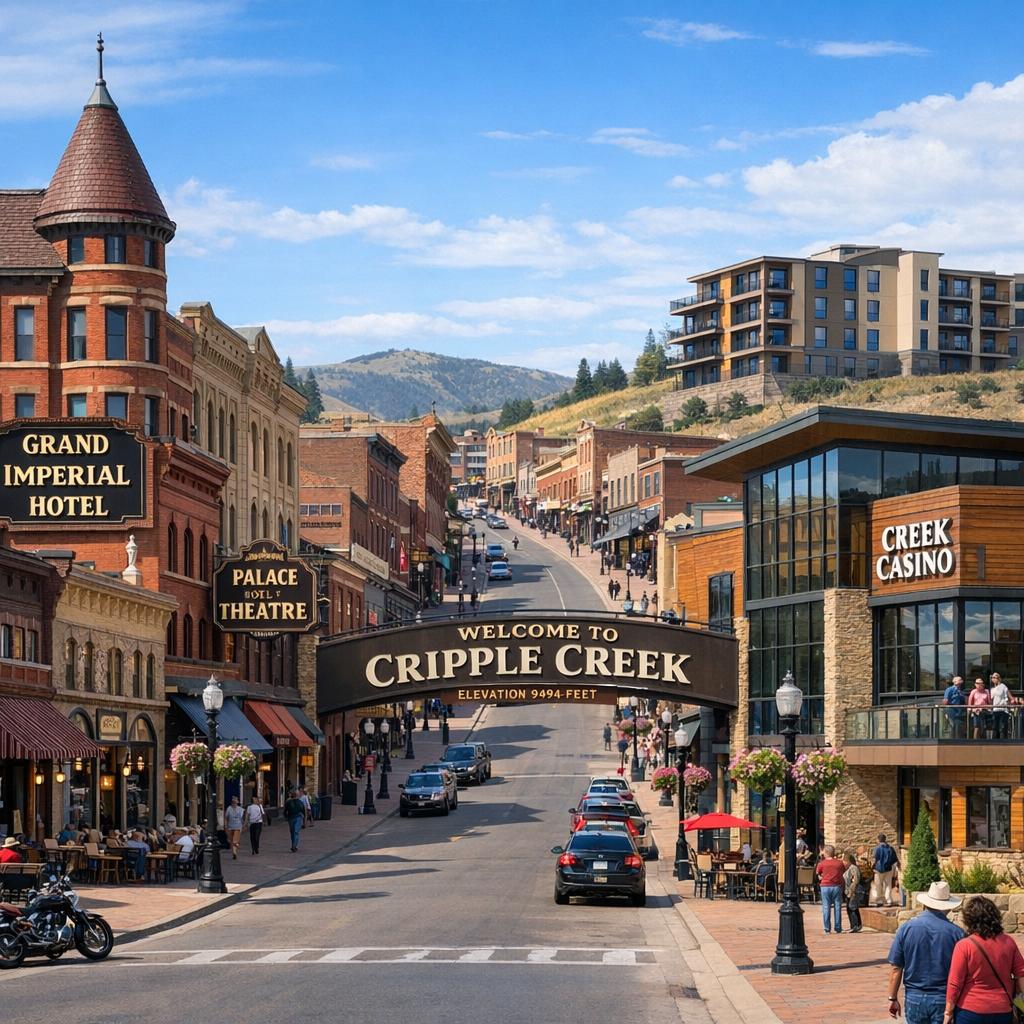
Cripple Creek, Colorado, renowned for its gold mining heritage, continues to evolve economically while preserving its historical charm. The city’s designation as a ‘Main Street Community’ by the Colorado Department of Local Affairs underscores its commitment to revitalizing the downtown area and supporting local businesses.
Economic Development Initiatives
In January 2025, Cripple Creek was officially recognized as a Main Street Community, joining over 30 cities statewide in this program. This designation provides access to grant funding and consulting assistance for community development projects, aiming to create a lively, walkable, and welcoming downtown that harmoniously blends history with modernity.
Local Business Dynamics
Local businesses are the backbone of Cripple Creek’s economy, contributing approximately 60% to the city’s economic activity. Supporting these enterprises is crucial, as they provide employment opportunities and generate revenue that circulates within the community. For instance, patronizing local flower shops not only ensures fresh products but also bolsters the local economy by enabling business owners to reinvest in the community through hiring and supporting local events.
Housing Market Trends
The housing market in Cripple Creek reflects the city’s economic dynamics. As of April 2026, the average home value stood at $325,230, marking a 3.9% decrease over the past year. The median list price was $355,000, with 44 properties available for sale. This slight decline may present opportunities for prospective homeowners and investors interested in the area.
Demographic Insights
Cripple Creek’s population is projected to be 930 in 2026, with a median age of 60 years. The racial composition is predominantly White (76%), followed by Hispanic (8.9%) and Black (8.1%) communities. The median household income is $41,840, with a poverty rate of 20.31%. These demographics highlight the importance of tailored economic strategies to address the needs of the community.
Tourism and Employment
Tourism, particularly centered around the casino industry, plays a significant role in Cripple Creek’s economy. The city’s 2025 comprehensive plan indicates that over 70% of local jobs are in leisure and hospitality. However, a notable portion of the workforce commutes into the city, suggesting potential opportunities for developing local housing solutions to accommodate workers.
Conclusion
Cripple Creek’s economic landscape is a tapestry woven with threads of historical significance and modern development. By supporting local businesses, embracing strategic economic initiatives, and addressing housing and employment challenges, the city continues to honor its rich heritage while paving the way for a sustainable and prosperous future.